Looking Ahead To 2026

Issue 30 – 29th December 2025
Welcome to Issue 30 of The Long Term Edge, your weekly guide to compounding over 7+ years.
As the year winds down, markets are doing something that often feels uncomfortable: drifting higher in near silence. Volumes are thin, headlines are scarce, and volatility is compressed, yet prices remain resilient. This signals a market being supported by structure, liquidity, and earnings visibility heading into 2026.
When nothing seems to be happening, trend matters more than noise.
Market Overview (22 December-26 December)
U.S. equities finished the week quietly higher, with limited volatility and thin year-end liquidity.
The S&P 500 continued to hover near record levels, supported by stable earnings expectations.
The Nasdaq consolidated after a strong run, while the Dow showed relative strength.
Volatility remained suppressed, reflecting a lack of forced selling or macro stress.
Markets digested GDP revisions and positioning adjustments rather than fresh catalysts.
Quiet Strength Into Year-End
Late December markets are rarely about new information. They’re about positioning, liquidity, and whether existing trends are fragile or durable. This week leant firmly towards durability.
With few macro releases and minimal Fed commentary, markets were free to trade on structure alone. The result was not a surge higher but a steady grind, the kind that reflects confidence rather than speculation. This pattern often frustrates traders looking for excitement, but it tends to reward long-term investors who understand how cycles mature.
The seasonal tailwind matters here. Historically, the final trading days of the year skew positive not because fundamentals suddenly improve, but because selling pressure fades. When there’s no urgency to de-risk, prices drift towards equilibrium, and equilibrium this cycle remains elevated.
Bull case for 2026
Looking beyond year-end, the macro backdrop entering 2026 is more supportive than consensus fears suggest.
Earnings growth, not rate cuts, is the dominant driver now. Corporate margins remain resilient, balance sheets are strong, and productivity gains, particularly from AI adoption, are beginning to show up beneath the surface. Liquidity conditions, while no longer expanding aggressively, are no longer tightening either. That alone reduces downside risk.
Crucially, the market no longer requires perfect data. Growth can slow modestly without breaking the trend, as long as earnings expectations remain intact.
Investing risks in 2026
The real risks are not the ones dominating headlines.
Valuations are elevated, but they are uneven, not systemic. Labour market cooling is real, but it looks controlled rather than disorderly. Inflation may reappear in monthly prints, yet market-based expectations continue to roll over, suggesting credibility remains intact.
The greater risk is mispositioning: being too defensive in a market that is still compounding. Volatility is not risk. Being structurally misaligned with the earnings cycle is.
Excess fear today is focused on inflation spikes, policy mistakes, or geopolitical headlines. Yet the underlying structure; earnings, liquidity, balance sheets, does not support a broad reset.
AI Outlook in 2026
The AI trade is evolving.
The early phase was defined by infrastructure: chips, hyperscalers, and data centres. That phase delivered outsized returns and is now crowded. The next phase is less about raw capacity and more about deployment: applications, agents, automation, and productivity.
This transition matters. Capital intensity becomes a filter. Companies that can translate AI into earnings growth without endlessly expanding capex will outperform. Those relying purely on scale without efficiency will struggle.
This shift doesn’t end the AI cycle; it refines it.
Two Long-Term Compounders to Watch
Rather than chasing themes, it pays to focus on businesses that quietly benefit from multiple structural tailwinds.
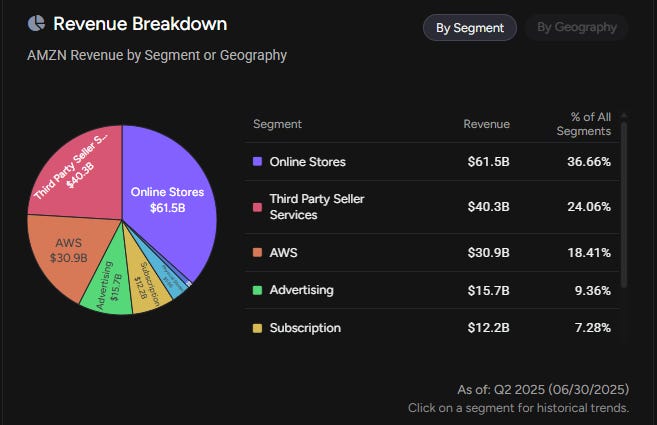
Amazon is well-positioned for growth, particularly within its Amazon Web Services (AWS) segment, which is projected to achieve a year-over-year growth rate of 22% next quarter, supported by increased capacity and rising demand in artificial intelligence and core services. The AWS division has already surpassed a run rate of $130 billion and is expected to maintain a robust growth trajectory, potentially exceeding 20% in the coming years as capacity continues to expand. Additionally, the company's retail-related revenue, which constitutes the majority of its total revenue, alongside a solid international presence, positions Amazon favourably in the competitive landscape, enhancing its long-term financial outlook.
Amazon (AMZN) is expanding its robotics program, potentially cutting up to 600,000 jobs globally by 2033 through automating 75% of operations like fulfilment and delivery, per internal documents reviewed by The New York Times. This could displace 160,000 U.S. roles by 2027 and save tens of billions via $0.30 per package efficiencies. Robots already handle three-quarters of deliveries in over 300 facilities, making Amazon’s system the world’s largest upon expansion. To manage reputational risks, the company plans community outreach and messaging focused on “cobots” for human-robot collaboration.
This automation strategy primarily impacts warehouse and logistics tied to AMZN’s core revenue segments.
Visa's dominant position as the largest payment processor globally is reinforced by its impressive processing volume of nearly $17 trillion in fiscal 2025, with total payments volume growth of 9% year-over-year in the most recent quarter. The company continues to experience robust consumer spending, evidenced by solid growth in both discretionary and non-discretionary spending across various spend cohorts. Furthermore, Visa's ability to maintain guidance for low double-digit earnings growth for fiscal 2026, coupled with significant increases in stablecoin card spending, highlights a strong outlook for future performance.
Week Ahead: December 29 – January 2
The final trading days of the year are defined by liquidity rather than news.
Volatility may appear suddenly due to thin volume, not fundamentals.
Any macro releases are likely to have outsized short-term effects.
Institutional positioning for 2026 will quietly begin beneath the surface.
Closing Thoughts
Markets are closing the year with clarity rather than conviction. That’s often how durable trends survive. The noise fades, structure remains, and compounding continues quietly.
Long-term investing is not about reacting to every signal; it’s about recognising which ones matter.
Clarity compounds. Stay long-term.
Disclaimer: This newsletter is for informational purposes only and is not financial advice. Always do your own research or consult a licensed advisor.